

Jean-Marie Toulgouat (1927-2006): Monet’s last Artistic Heir
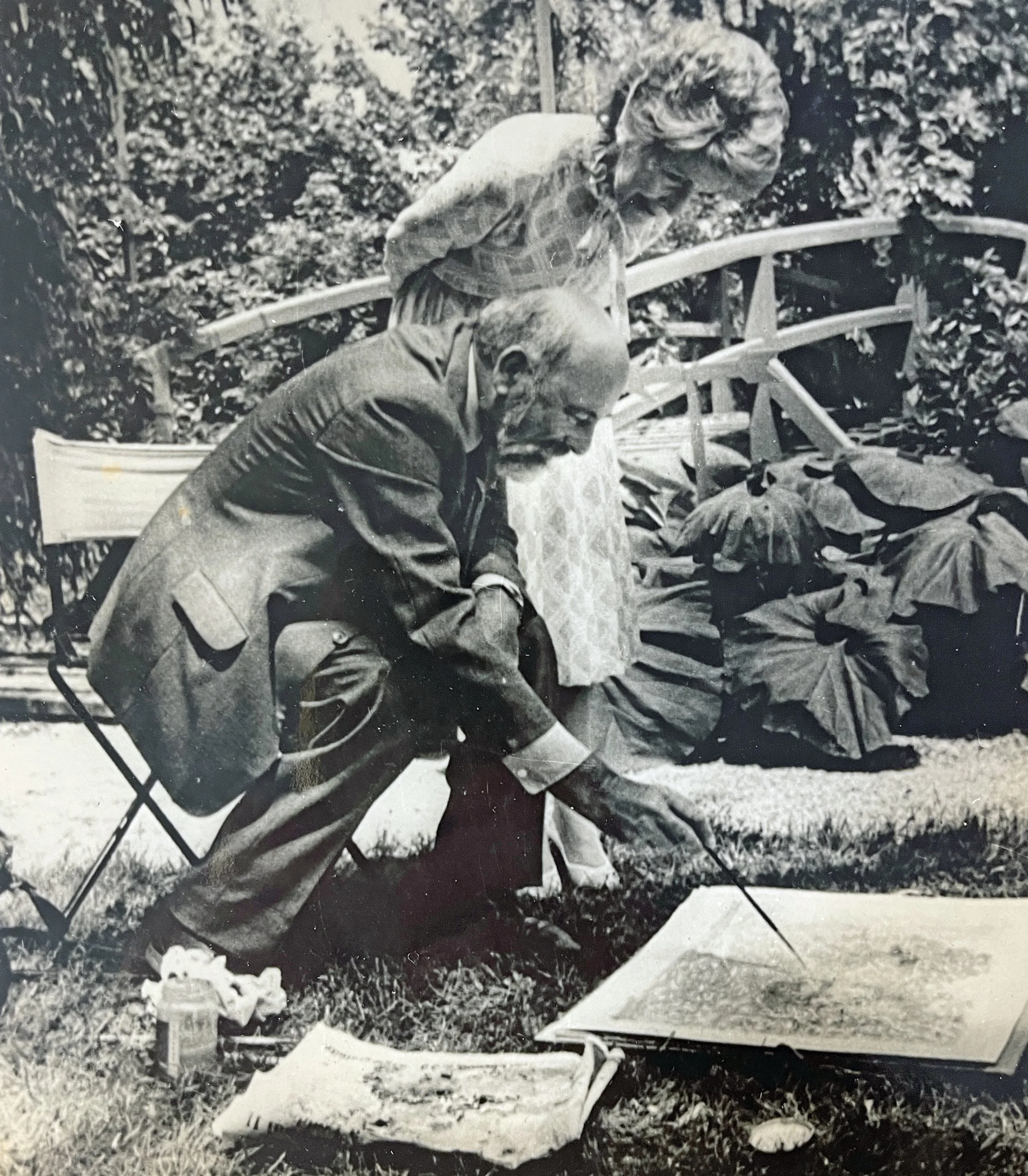
Nancy Reagan visiting Claude Monet’s garden in Giverny, with Jean-Marie Toulgouat at his easel, 5 June 1982. Photograph © GivernyART Archive.
Jean-Marie Toulgouat belongs to the lineage of Claude Monet’s family and artistic circle. Grandson of the American Impressionist Theodore Earl Butler and Blanche Hoschedé-Monet, he inherited not only a family name but also the light and atmosphere of Giverny. From his atelier at La Longère, Toulgouat developed a personal vision — rooted in Impressionist tradition yet attentive to modern sensibilities — that placed him among the important artistic heirs of Monet’s legacy.
Throughout his career, from the late 1960s until his passing in 2006, he exhibited in France and abroad, building a consistent body of work that bridges the century between Impressionism and contemporary painting. At the same time, he devoted himself to scholarship and to the restoration of Monet’s house and gardens at Giverny, a project undertaken with his wife, the writer Claire Joyes, that contributed decisively to the site’s international renown.
My connection to Jean-Marie is both scholarly and familial. In the course of preparing the catalogue raisonné of Theodore Earl Butler, I encountered letters written between Butler and his grandson Jean-Marie, as well as photographs and archival documents from my own family collection. These materials confirm his central role as both painter and custodian of the Giverny heritage. They also reveal the esteem in which he was held internationally — from private collectors to cultural figures, including George H.W. and Barbara Bush, who valued his contribution to preserving Monet’s home.
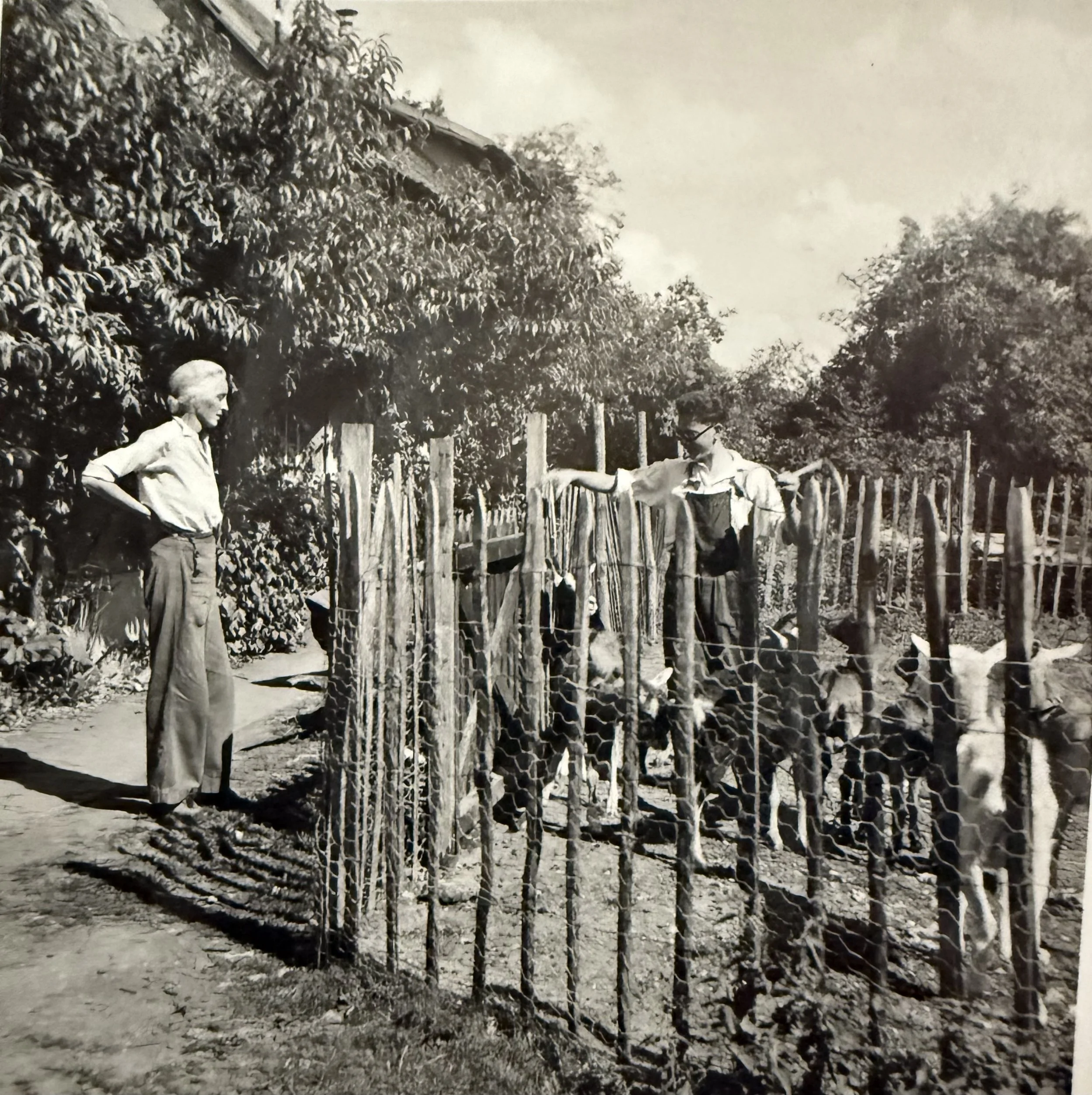
Jean-Marie & his mother Lily Butler feeding goats.
This blog will explore Toulgouat’s artistic trajectory, his exhibitions, and the wider family heritage that shaped his work. It is also an invitation to institutions and collectors who recognize the importance of safeguarding this legacy — not only as part of Monet’s family story, but as a vital chapter in the evolution of modern painting in Giverny.
